Personalized Learning: Early Childhood Education Adaptation
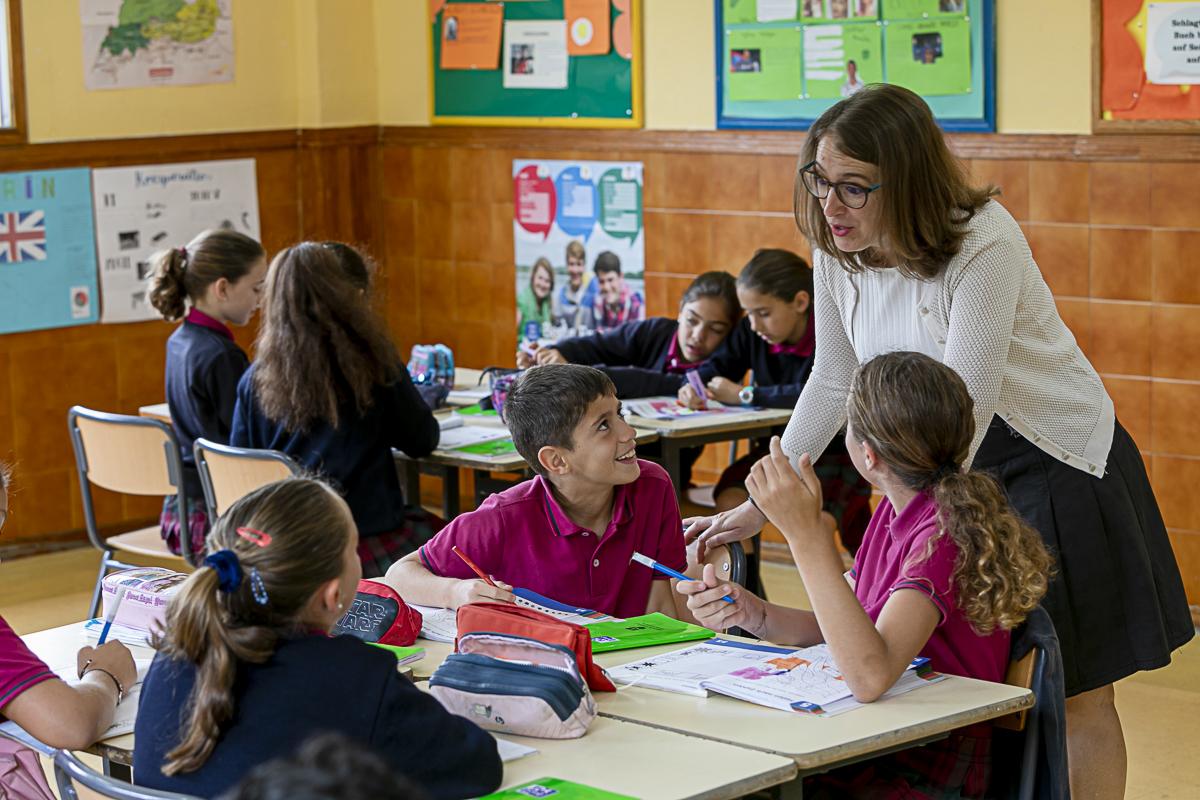
Personalized learning in the first stage of education is essential to foster a comprehensive development adapted to each child. This approach recognizes and values individual differences in skills, interests, and learning rhythms. For example, while one child may show an early interest in numbers and patterns, another might be more inclined toward art and creative expression. Atlantic School works from the Infant stage with the aim of adapting our teaching methodology so that each student can develop and thus facilitate learning according to their needs and interests.
What is personalized learning?
Personalized learning consists of adapting the contents and teaching methods to the individual characteristics of each child. This methodology is focuses on each individual, being dynamic and flexible, and moving away from the traditional educational method where all students receive the same education without considering their individual differences.
How is it different from traditional learning?
In a traditional classroom, all students follow the same curriculum at the same pace: Everything is governed by a calendar and the same syllabus, regardless of of each student's personal abilities. This can demotivate and frustrate both students who are moving faster and those who need more time. Instead, personalized education focuses on each student individually, to tailor the pace and style of teaching to their needs. For example, a child who has ease in reading, thanks to personalized education will be able to explore more complex books, while another may receive more support in this area. Without delaying or conditioning the individual evolution of each one, and equalizing their learning opportunities.
Identification of individual needs
Identifying the individual needs of each student is the first step to achieving a personalized education. To do this, regular evaluations can be carried out that do not examine not only academic performance and achievement of key objectives, but also the interests and learning styles of each child. For example, observing whether a child learns better through practical activities rather than a theoretical syllabus can be crucial for their educational development.
Adaptability of the curriculum and educational spaces
To achieve a 100% educational methodology customized, we must have a flexible and adaptive curriculum. This means being able to modify both the contents and the teaching methodology. This educational approach not only maintains the interest of children while they learn, but also enriches their educational experience, allowing them to explore according to their preferences and learning style.
It is also very important that the environments of learning reflect and support the diversity of learning needs. The redesign of the classrooms should be considered, offering different areas of activities adapted to the diversity of learning and energy levels of all students.
Educational technology and tools
Technology is an unconditional ally of education, and even more so of personalized education. Through different softwares the possibility of adapting the contents to the rhythm of each student, thus having a virtual assistant. Digital tools make it easy to review or progress in learning.
Emotional Development and Socialization
Emotional development in early childhood education is paramount and personalised education encourages children to feel valued and understood, generating better self-esteem and emotional skills. Allowing a child to choose activities based on their interests can increase their motivation.
This educational approach is not only great for individual learning, but also strengthens their social skills. Children are immersed in an inclusive environment that celebrates and respects their differences. With the aim of encouraging socialization and teamwork, group activities can be designed that focus on collaboration and communication, tailored to each child's social and emotional abilities.
Role of teachers
Finally, and one of the most important points: the role of teachers. They play a crucial role in the development of personalised education. They must be trainers, observers and continuously adjust their strategies to address the needs of each child. To do this, they must be continuously trained and have a commitment to the personal development of each of their students.
As a support and to facilitate the work of teachers, there are several applications to develop a personalized methodology and constant communication between parents, students and teachers.
Khan Academy: This platform offers lessons in a wide range of subjects that students can explore at their own pace. It is particularly useful because it allows educators to track each student's progress and tailor learning recommendations based on their needs.
Schoology: Schoology offers extensive functionalities to manage the classroom and adapt learning to each student. It allows you to integrate applications and content of third parties, thus facilitating a more personalized and connected approach.
ClassDojo: This tool is great for improving communication between students, educators, and parents. It allows educators to share photos and videos of classroom activities and customize communication to students' educational and emotional needs.
Looking back, we can see the big difference and all the evolution in educational methodologies, highlighting personalised education. This educational model is clearly the future of education, with numerous benefits when implemented from an early age. Always hand in hand with the technological tools that help our teachers develop a 100% personalized and comprehensive education.