Music and Neuroscience in Early Childhood Education
Music is part of the person's life from the womb; it lasts over the years and, almost without realizing it, it generates the activation of various brain circuits that together with multisensory experiences are key to enhance the learning process of any child. It is, therefore, one of the educational aspects that neuroscience is currently facing.
The project atlantic Kids is also scientifically based on the contributions of neuroscience. In the case of music, we have a vehicle to direct attention to energy activity, to affective, cognitive and cooperative mechanisms.
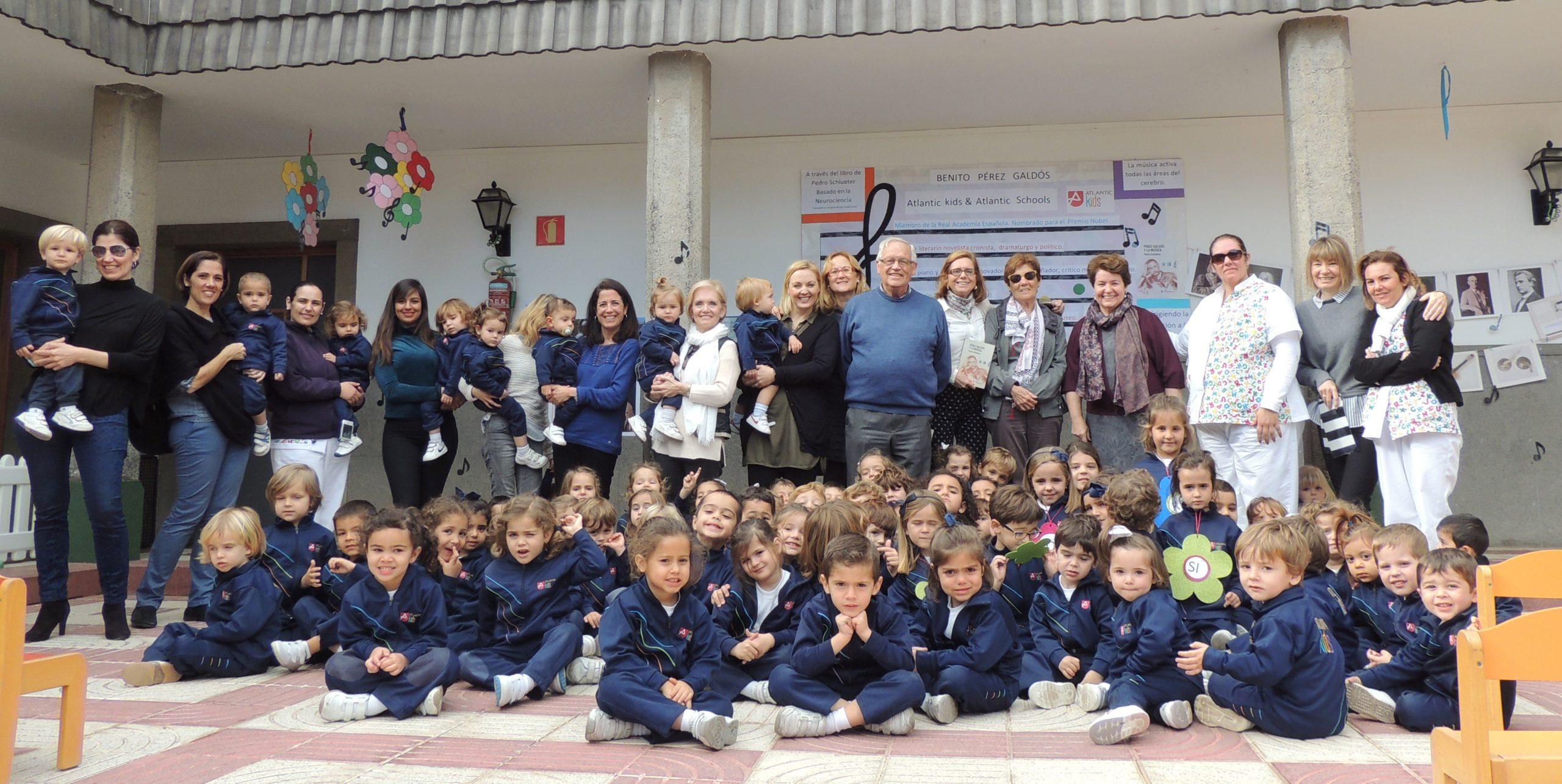
We will highlight as an example one of the latest embodiments in this line. With the aim of promoting personalized, meaningful, functional work, and meet Benito Pérez Galdós, the students used the book "Pérez Galdós and music" by Pedro Schlueter as a work tool. The multifaceted writer, who is currently part of the board of directors of the Philharmonic Society of Las Palmas de Gran Canaria, visited Atlantic Kids last February, interacting with children in a meeting that is much more than educational.
Our students spent it in , they performed different compositions, which they know and enjoy naturally in the day-to-day life of the school. The chosen repertoire: Tchaikovsky's "Russian Dance" (Kids 1), Haydn's Symphony No. 92 (Kids 2), Beethoven's Symphony No. 7 (Kids 2), Bizet's Carmen Suite (Kids2), Saint-Saëns' Carnival of the Animals (Kids 3), J. Strauss's "Blue Danube" (Kids 4), "Do, re, mi" from The Sound of Music, by Richard Rodgers and Oscar Hammerstein II (Kids 5).
It is worth noting the importance of music in our educational project, based on the methodology of early learning; with it it is possible to activate all areas of the brain, favoring musical interpretation, body expression and creativity. In addition, at Atlantic Kids, education through music is part of the project bilingual, in total balance of dedication in both English and Spanish, thus facilitating learning in an interdisciplinary and inclusive way.